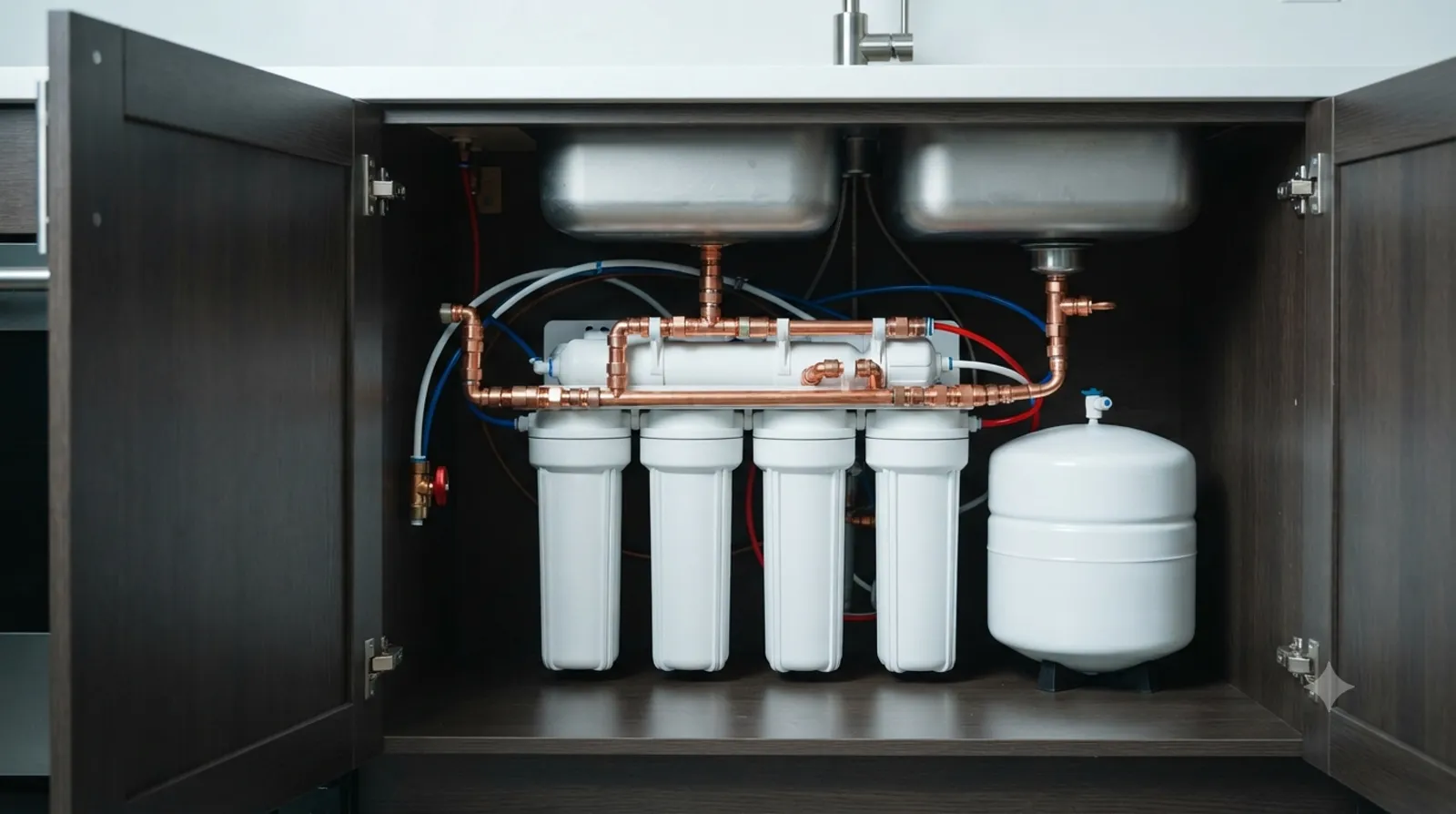
Water Filters, Decoded
Clearflow Lab ranks home water filters by the specs that actually decide results — the NSF/ANSI standard number (42 vs 53 vs 58 vs 401), GPD and drain ratio for reverse osmosis, GPM flow for whole-house, and grain capacity for softeners — not the marketing on the box. We don't publish prices or star ratings, every pick names an honest drawback, and we stick to certification facts, never medical claims.
Most "best water filter" lists sell the badge. We start from the certification: "NSF certified" under standard 42 does nothing for lead, a "salt-free softener" removes zero hardness, a TDS meter can't measure safety, and Berkey's headline claims are self-tested, not certified. Pick a category below — each guide leads with the one fact that changes how you shop.
Under-Sink RO (Tank)
The certified pick beats the '7-stage' pick. Genuine 42/53/58/401 certification and 1:1 drain ratios are rare — here's who actually has them.
9 picks →
Tankless RO
Instant flow, no tank — but every one needs a power outlet under the sink, and 'GPD' is a lab rating, not your tap speed.
8 picks →
Countertop & No-Install
Renter-friendly RO and gravity systems — plus why Berkey's big claims are self-tested, and which gravity filter is actually certified.
8 picks →
Whole-House & Well
GPM flow rate is the real sizing spec, not the million-gallon claim. Well water needs a test and the right tech first.
6 picks →
Water Softeners
Salt-free 'softeners' are conditioners — they remove zero hardness. Only a salt-based softener earns NSF 44 and real soft water.
5 picks →
Pitchers & Dispensers
NSF 42 vs 53 is the whole game — most cheap pitchers do nothing certified for lead. Filter cost-per-gallon spans ~300x.
7 picks →
Under-Sink Carbon & Faucet
Full-flow, no wastewater, certified lead reduction without RO — and the filter with the lowest cost-per-gallon of all.
5 picks →
Test Kits & TDS Meters
A TDS meter does NOT measure safety. A certified mail-in lab test is the only way to know what's actually in your water.
6 picks →
Start here — plumbed, pitcher, and the filter you'll rebuy
What a filter actually removes is defined by the NSF/ANSI standard it's certified to, not by the word on the box. Read the standard first, then these are the lead picks at both ends of the range, plus the replacement filter. Each links to a live Amazon search.
Brondell Capella RC250
3 real stages, ~50 GPD, tank, WQA-certified to NSF/ANSI 42, 53, 58, 401 & 372, ~1:1 drain ratio
One of the very few tank systems with genuine multi-standard certification (42/53/58/401) AND an efficient ~1:1 drain ratio instead of the usual 3:1 waste.
Best for: Buyers who want the broadest real certification without stage-count games
Watch out: Only 3 filter stages and a small tank, so refill/recovery is modest for big households, and there's no remineralization — the honest trade is fewer stages for better certification.
Check price on AmazonNot deciding today? Add it to your cart over there — Amazon keeps it saved (and flags any price change) until you're ready.
Brita Elite Pitcher (Longlast+)
Pitcher, 120 gal / 6-month filter, WQA-certified NSF/ANSI 53 (lead, mercury) + 42 (chlorine), ~$0.14/gal
Reaches NSF 53 for lead with a long 120-gallon filter, giving the best real cost-per-gallon among certified pitchers.
Best for: Households wanting certified lead reduction with low ongoing filter cost
Watch out: The much cheaper Brita 'Standard' filter is NSF 42 only (does nothing certified for lead) — buyers constantly confuse the two; the Elite also flows slowly and clogs faster in hard water, and it's not certified for PFAS.
Check price on AmazonNot deciding today? Add it to your cart over there — Amazon keeps it saved (and flags any price change) until you're ready.
Waterdrop G3P800 Replacement Filter Set (CF/CB/MRO)
Fits Waterdrop G3/G3P800; CF ~6 mo/550 gal, CB ~12 mo, MRO membrane ~24 mo/2200 gal
The correct proprietary set for Waterdrop tankless systems on a staggered 6–24 month cadence.
Best for: Keeping a Waterdrop tankless RO performing on schedule
Watch out: Proprietary twist-lock cartridges — generic universal filters do NOT fit Waterdrop tankless housings, so you're locked into brand pricing.
Check price on AmazonNot deciding today? Add it to your cart over there — Amazon keeps it saved (and flags any price change) until you're ready.
Aquasana OptimH2O RO + Claryum (AQ-RO-3.55)
RO + Claryum + remineralizer, tank, WQA-certified NSF/ANSI 42, 53, 58 & 401, adds Ca/Mg/K back
Strong 42/53/58/401 certification (including PFAS and pharmaceuticals via Claryum) plus a remineralizer that puts minerals back for taste.
Best for: Households wanting certified PFAS/pharma reduction with better-tasting remineralized water
Watch out: Drain efficiency is poor (roughly 4:1 — the least efficient here), the small tank refills slowly, and the proprietary Claryum + membrane + remin cartridges are pricey and must be changed on schedule.
Check price on AmazonNot deciding today? Add it to your cart over there — Amazon keeps it saved (and flags any price change) until you're ready.
The claims worth decoding first
Quick answers to the questions buyers actually ask
Direct, one-sentence answers first — then the certification detail behind them. These are the three questions we see asked most, answered strictly from the NSF/ANSI listings.
How we work
We're a research-based site: we analyze manufacturer specifications, published NSF/WQA/IAPMO certification listings, and aggregated owner-feedback themes rather than physically testing every system. We explain tradeoffs plainly, always name a downside, and report what a product is certified to reduce — never a health outcome. Read our full methodology →
The figures behind every page on this site live in one place: Water Filtration Key Facts — our maintained reference on what each NSF standard actually covers, what reverse osmosis does and doesn't remove, and the numbers worth quoting.